Boarzoy and The Boar Metal Movement

Skateboard wheels screech against concrete. The air is warm, lightly blowing the multicolored hair past the foreheads of audience members. Wires snake around stacked amps and crooked microphone stands, outlining the dusty dirt bowl of Lynch Skate Park. It is here that local punks gather for the third ever Out For A Rip showcase.
Bands with roots in punk, shoegaze, and noise rock play throughout the night. Heads swing low, bobbing to the beat of a uniquely-tuned snare. In the center of the group, youthful concertgoers form an uneven circle, making just enough room for moshers to kick, jump, and swing their tattooed arms. Every now and then, someone works up the courage to jump in, trying to find a moshing rhythm.
As the third act exits, the next group emerges—a four-piece sporting loose t-shirts and frayed jean shorts. They introduce themselves as Boarzoy.

“We just released two songs on Friday. You should go listen to them. This is one of them, it’s called ‘Guts’ and it’s about throwing up,” says the singer. The low trill of a guitar riff hums and the unassuming crowd stills—but not for long. Seconds into their set, the crash of the instruments and brazen growl of the lead singer brings an animal-like aggression out of audience members. The hole that was once in the middle of the crowd is flooded by almost every sideliner of the night. The unkempt energy of the punk attendees remained consistent throughout the entirety of the twenty-three minute set, cementing Boarzoy as a force within the Boston music scene.
Boarzoy’s journey began over a decade ago in California, where singer Rennie Boyd and drummer Taylor Winterhalder met in their kindergarten class. Their musical relationship started early, forming their first band, Evil Flowers, in the second grade.
It was at Berklee College of Music that Winterhalder would converge with Boarzoy’s other two members, guitarist Jake Sklodowski and bassist Riley Senne.
The band was originally just Sklodowski and Winterhalder in a practice room, jamming some of their metal favorites. Eventually, Senne heard the two jamming Mastodon and found himself interested in their project.
Senne: You guys were jamming some Mastodon. I was like Oh, what the hell, man. I play bass, and I wanna be there with you guys.
Winterhalder was initially the only one of the two Evil Flowers members to pursue an education at Berklee in Boston. The band remained a trio for a few months. Unable to land a singer who stuck, they were uncertain about where to go, even debating sticking to a purely instrumental arrangement. It wasn’t until Boyd decided it would also be in his best interest to go to Boston that they would find a singer, finally giving them their purpose as a group.
Sklodowski: Yeah, as soon as we met, it was just kind of a no-brainer. The pieces were going to fall together.
Boyd: We hit the ground running writing after that so quickly.
Sklodowski: It was pretty fucking quick, yeah. I mean, yeah, that's pretty much how that happened. Before Rennie was in, we didn't really even know what the fuck we were.
Boarzoy wasted no time upon Boyd’s arrival. They swiftly began to write and record, which culminated in the release of their debut album in November of 2023. They worked at an impressive pace, managing to write almost the entire album, Ever Watchful Hateful Eye, in merely two or three months.
Winterhalder: We used that process kind of as a way to figure out what the band should be because all the songs kind of sound different.

The album exudes a vigorous excitement with grizzly guitar riffs, pulsating rhythms, and violent drum patterns. Upon reflection, they all see the urgency of this album as an extension of their desire to play music live.
Senne: We just really wanted to get out and play shows, and we wanted songs to play at them, so we had a little more adrenaline in the process. We were just kind of feverishly trying to get them done.
The record became a learning experience for all of the members. In addition to the basics of recording, the band also learned that striving for perfection is not always a necessity when it comes to making music.
Sklodowski: You don't have to get perfection, but you have to get something you stand behind when you record.
[…]
Senne: There's not really a type of music we're trying to make; we're just kind of trying to make music that's honest to us, that we love.
It’s ingrained in Boarzoy’s makeup that creating something new, weird, and uniquely boarish is much more important than a flawless record. The philosophy of not playing by any standard is seen in many facets of Boarzoy. One way in particular is the genre that they have assigned themselves: Boar Metal.
“Boar Metal” did not exist before Winterhalder thoughtlessly wrote it in the band’s electronic press kit. Once invented, they didn’t think much more of the title until their fans gave the term a new life, relating it to their distinct sound.
Sklodowski: It’s been a cool thing. I didn't really realize it would catch on really quickly. It just kind of happened, I was like Oh shit!
Rennie: And it's funny to say catch on because we have like five fans, but our five fans really like the term. They reference Boar Metal!
As the band’s style evolved, Boar Metal remained a constant. The further they went, the weirder they got. Not fitting into any previously defined category of metal made the description that much more accurate.
Senne: The people who get it, they're like Oh yeah, you guys are just a nice little conglomeration of all the good metal bands throughout the years. So it's a good way to just say we're a metal band and we do our own thing.
The shift in mentality can be seen on their two most recent singles, “Guts” and “Computer Lizard”. Released this summer, the two songs stood out from their discography. Made for a friend’s school project, the songs were produced with more room to be experimental.
“Guts,” for instance, incorporates unique, dissonant harmonies, echoing guitar riffs, and an almost video game-esque style, making it jump out of their discography. “Computer Lizard” is its very own horror movie with a crunchy distortion over its bass and guitar sections and drum fills that jump out of your headphones, wrap around you, and pull you into Boyd’s growling, almost swine-like vocals. With witty lyrics like “No one thinks you’re funny,” the songs are gripping, raw, and unapologetic, having pieces that fall all over the place without feeling out of place.
Photos by @jvck.photo on Instagram
This is only the beginning of Boarzoy’s winning streak, as they have just recently finished recording their second studio album. As they have found new ways of making music, loosening the pressure on themselves, the recording process brings on a revived euphoria for the members of the band.
Boyd: We've been listening to the mixes of the second album as they're getting worked on, and we're getting emotional about it because we're making music that I think we put a lot more heart into.
The beauty of Boarzoy lies in their writing process and relationship as a band. Their music is rooted in the unorthodox, yet their connection is far from it. In fact, all of their songs are written together, in one room, on the spot.
Sklodowski: [Songs] could be just based off of two notes me and Senne brought in and then we “Frankenstein” it and we’ll just pump out songs right there.
With a writing process like this, one might assume that ideas are easily lost,forgotten in the copious number of new ideas brought in every rehearsal. For Boarzoy, however, this is not the case.
Boyd: Ideas never get lost.
Sklodowski: No, they don't.
Boyd: Everything gets used eventually.
“Guts” is a testament to their dedication to never lose a good riff. Many of the parts, in reality, were written before Boyd was even a member of the band.
Senne: The friend who was our producer was making our songs for their class. We had to send in demos at the beginning, and the professor basically, with one of the songs we were working on, was like No, do something else. So, we kind of had to scramble last minute and be like, okay, well, let's throw together all these old ideas, a bunch of the old riffs that I've had sitting around for years.
Part of the reason it is so easy for them to integrate old ideas into their new work is because of their bond. It would not be crazy to say that the four are each other’s musical soulmates, claiming they’ve never had as much as a serious disagreement when it comes to the way a song should be done.
Sklodowski: It's really easy sitting in a room with these guys. When it's like, I don't know where this goes, somehow, it just always unfolds, and we know where to go.
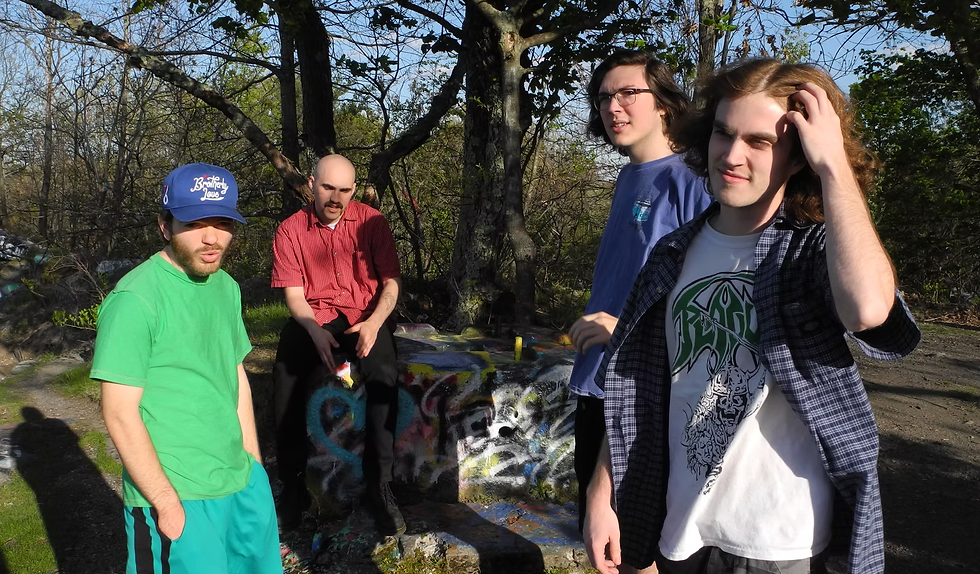
The only true disagreement the group has ever had was over the band’s name. Based on the dog breed borzoi, they could not agree over whether they should finalize it as their name or not. They ultimately decided to shift the spelling from “Borzoi” to “Boarzoy,” giving them an edge and releasing them from any dog associations.
Boyd: I've never been into boars.
Senne: It's more metal than the Borzoi dog, I guess. It’s a more metal-looking creature.
Boyd: Boars are metal as fuck. They're really gross little evil motherfuckers.
Sklodowski: I always thought it sounded cool to say. It sounds pretty fat and big, Boarzoy.
Winterhalder: Yeah, there's been other metal bands that are just big creatures as their name, so it kind of fits in that.
The power of their connection radiates through their music, explaining why the abnormal pieces fit so perfectly together. This connection does not stop at each other, however—in their mission statement, the band explains that the music they make is meant to grip and form bonds with their listeners, no matter who they are.
Boyd: We kind of make music for the freaks and the weirdos.
In making music that’s honest to them, they bring that level of connection to their audience.
Winterhalder: We write music based on what we want to hear, based on what we've grown up listening to, loving. It's kind of just the philosophy of what we love, other people will be able to connect with.
Boarzoy is a band that is more than dedicated to their audience; they find ways to make it clear they love them at every show.
Boyd: There's so much machismo and aggression in hardcore music, and yeah, we make really loud, angry music. I’m screaming my head off, but also, I make sure to say it during every show: Boarzoy loves you, because we do.

At a time when human rights are threatened under a dangerous political administration, keeping a strong artist-audience bond in underground scenes is vital in protecting the power of community. Without these spaces the targeted parties, not only have nowhere to go, but they are also unable to form essential connections to stay protected if our political and social landscape gets out of control.
Boyd has made it a live show ritual to deliver political remarks before and between songs— even including some of his political views in his lyrics. He feels this transparency is a requirement for someone in his position of power.
Boyd: As a straight white dude, I feel like if you're gonna be in the scene, you gotta be adding something to it. You have to be fighting for something. [...] Just because we're a small band doesn't mean that it doesn't matter.
If venues and bands stop using their privilege to organize safe spaces for concertgoers to find shelter, the world will become a scarier and darker place.
Winterhalder: It needs to keep happening because when that dies, I don't want to know what the world is going to look like when people aren’t making noise together just to make noise.
Without spaces to make noise, both musically and politically, the powerful connection of people is lost, leaving many vulnerable.
Boyd: Having community is important, and nothing can actually change unless people organize, whether it's socially or politically. People need to be in rooms together. I mean, like, at a time when there are masked unbadged federal police officers rolling up in vans and kidnapping people in front of their children and shit, you need to look out for each other.
It is for this reason that Boarzoy has made an effort to upkeep the DIY scene through both playing shows and ensuring their audience is having a good time no matter what.
Sklowdowski: I don't fucking care if it's one person or a hundred or whatever, just like any show, you just have fun, meet people, just fucking bang your head.
Winterhalder: Whenever somebody after a show comes up to me and they're like, I don't listen to metal, but I really fuck with you guys; that's like the coolest thing I can hear.
Boyd: We play really small shows, so it's not like oh, when you have five thousand people screaming your name and you're all in it. It's like, no dude, there are fifteen people in this room and we're all having a good time and everybody wants to be here and the enjoyment the audience gets from watching us play is the same enjoyment I get from just watching them bob their heads or shake their booty like that's what it's all about.
The space that Boarzoy have carved out for themselves in the Boston music scene is raw and real, making the sweaty underground a second home for many.
As they prepare to release their second album, Boarzoy stands firmly on the foundation they’ve built together, promoting unfiltered creativity and the belief that any noise is good noise, even if it's the pained squeal of a wild boar.
Halloweekend is coming soon, check out Boarzoy's moshing etiquette!


Comments